
The Document That Makes or Breaks Your Production
Ask any factory manager what causes the most production errors and the answer is almost always the same: incomplete or ambiguous tech packs.
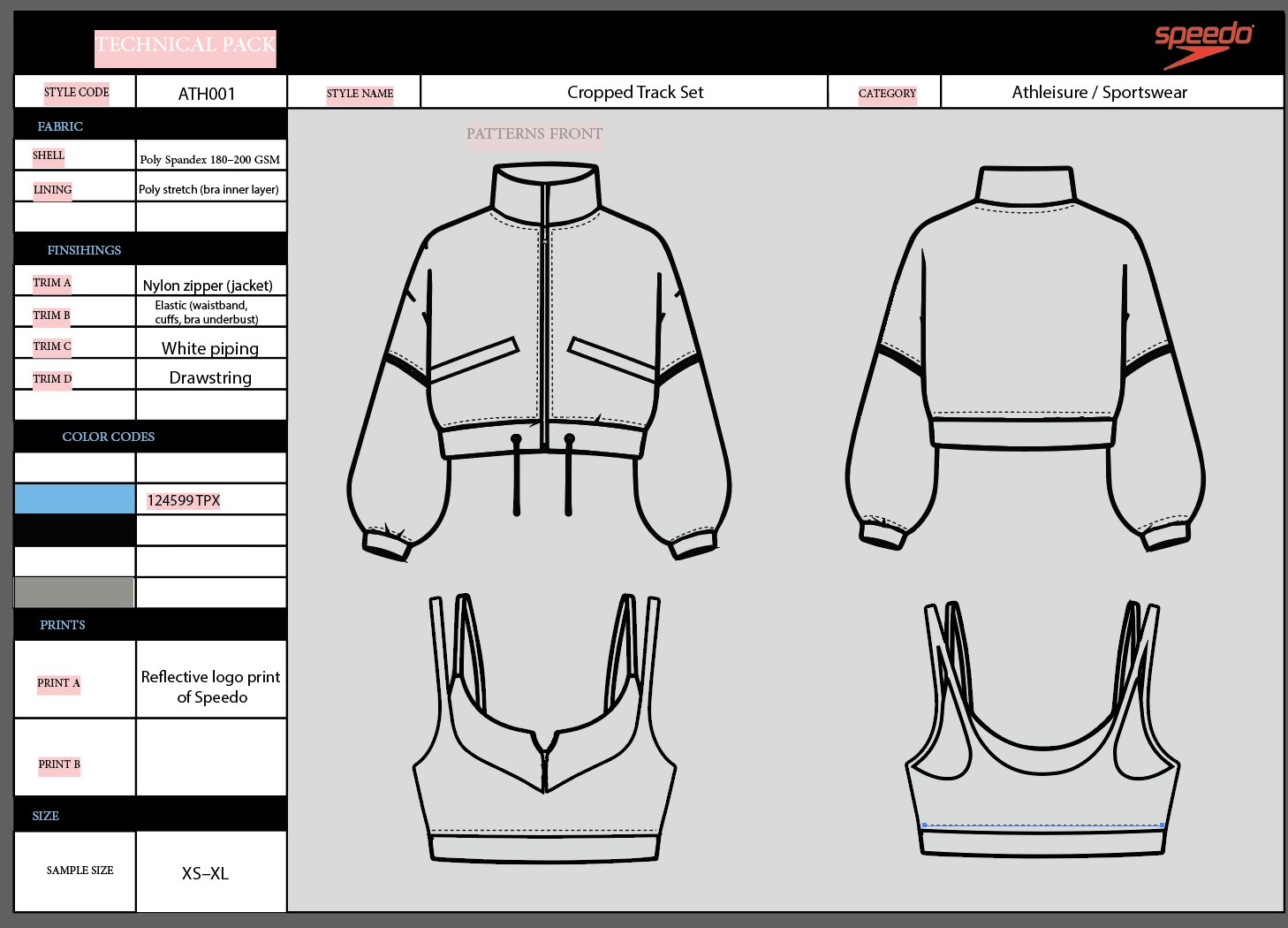
A tech pack — short for technical package — is the blueprint your factory uses to manufacture your garment. It contains every specification a factory needs to produce your design: construction details, measurements, seam types, fabric references, trim placements, label positions, packaging instructions, and quality standards.
When the tech pack is clear, the sample comes back right on the first try. When it's vague, you get a chain of emails, WhatsApp messages, and "please clarify" requests that add weeks to your timeline.
The difference between a good tech pack and a bad one isn't complexity. It's clarity.
Anatomy of a Production-Ready Tech Pack
A complete tech pack typically includes the following components:
Flat Sketches (Front and Back)
Clean, technical line drawings of the garment from front and back views. These aren't fashion illustrations — they're engineering drawings. Every seam, dart, pocket, and stitch line should be visible and labeled. Adobe Illustrator is the industry standard for flat sketches, though CLO 3D can now generate these directly from the 3D model.
Construction Details
Zoomed-in callouts of specific construction areas: how the collar attaches, how the cuff is finished, what type of hem is used, how the zipper is inserted. These details eliminate ambiguity. A factory in Vietnam and a factory in Portugal should produce the same garment from the same tech pack.
Bill of Materials (BOM)
A complete list of every material used in the garment: main fabric, lining, interfacing, thread, buttons, zippers, labels, hang tags. Each entry includes the supplier, color code, quantity per unit, and placement.
Measurement Chart and Grading
Base measurements for the sample size, plus grading rules that define how measurements change across sizes. A well-graded chart ensures consistent fit from XS to 3XL — not just proportional scaling, which distorts fit at the extremes.
Colorway Specifications
Pantone references, fabric swatches, or digital color chips for each colorway. If the same style is produced in five colorways, each one should be individually specified — not assumed.
Trim and Label Placement
Exact positions for care labels, brand labels, hang tags, and any decorative trims. "Place label at center back neck" is clear. "Place label at back" is not.
Packaging and Folding Instructions
How the garment should be folded, poly-bagged, boxed, and shipped. Neglecting this section leads to garments arriving wrinkled, mislabeled, or incorrectly packed for retail.
The CLO 3D Advantage
Traditional tech packs are built from flat sketches and measurements — abstract representations of a three-dimensional garment. CLO 3D changes the equation by allowing designers to include photorealistic 3D renders alongside the 2D specifications.
When a factory receives a tech pack with both the flat sketch and a 3D render showing the garment from every angle, the margin for misinterpretation shrinks dramatically. They can see the drape. They can see how the collar sits. They can see the sleeve pitch.
This isn't a luxury — it's a competitive advantage. Brands using 3D-enhanced tech packs report first-round approval rates above 90%, compared to an industry average closer to 50–60%.
Common Tech Pack Mistakes
Even experienced brands make these errors:
- Assuming the factory will "figure it out" — They won't. Or they'll figure out something different from what you intended.
- Using inconsistent measurement points — If your tech pack says "chest width" but your factory measures at a different point, you'll get a different number.
- Skipping the BOM — A missing BOM leads to mismatched trims, wrong thread colors, and surprise costs.
- Not updating the tech pack after revisions — If you change something in the sample, update the tech pack. A factory working from an outdated tech pack is a factory making the wrong garment.
The Bottom Line
Your tech pack is your contract with the factory. It's the document that says: "This is exactly what I want." The more precisely you communicate that, the faster you'll get to production — and the fewer expensive surprises you'll encounter along the way.
Invest in your tech packs the way an architect invests in blueprints. Because in production, the blueprint is everything.