
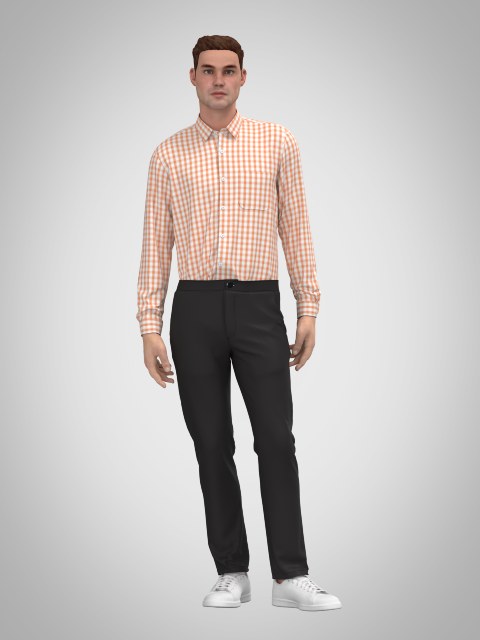
The Hidden Waste in Fashion's Creative Process
When we talk about sustainable fashion, the conversation typically gravitates toward organic cotton, recycled polyester, and ethical labor practices. These matter enormously. But they address the symptoms of a deeper problem: fashion's design and development process is inherently wasteful.
Consider what happens before a garment reaches production. A typical collection might go through 3–5 physical sampling rounds per style. Each round requires fabric to be cut, sewn, shipped, evaluated, and — more often than not — discarded. A 40-style collection can generate hundreds of sample garments that are never sold.
That's not a materials problem. That's a process problem. And it has a process solution.
Where the Waste Actually Lives
Let's break down the environmental cost of traditional garment development:
Physical Sampling
Each physical sample requires 1.5–3 meters of fabric, plus thread, buttons, zippers, and other trims. If a style goes through four sampling rounds, that's 6–12 meters of fabric used per style — fabric that will never be worn by a customer. Across a 50-style collection, that's 300–600 meters of fabric wasted on development alone.
Shipping Samples
Samples are routinely shipped between designers, pattern makers, and factories — often across continents. A single sample shipment from India to New York generates approximately 5–8 kg of CO2. A 50-style collection with four sampling rounds involves 200 individual shipments.
Design Revisions
When a physical sample doesn't match the designer's vision, the revision process starts from scratch. New fabric is cut, new samples are sewn, new shipments are arranged. Each revision multiplies the waste.
Overproduction from Poor Specifications
Vague tech packs lead to production errors. Production errors lead to excess inventory. Excess inventory leads to markdowns, donations, or landfill. The root cause traces all the way back to the design and communication phase.
How Digital Design Solves This
A digital-first design workflow doesn't just reduce waste — it restructures where decisions happen in the development timeline, moving critical choices upstream where they're cheapest to change.
3D Sampling Replaces Physical Iteration
In CLO 3D, a designer can iterate on a garment 20 times in a single day without cutting a single piece of fabric. Every adjustment — fit, proportion, fabric, colorway — is evaluated digitally. The physical sample becomes a confirmation step, not an experimentation step.
Virtual Fit Sessions Eliminate Shipping
Instead of shipping samples between offices and factories, teams can conduct fit reviews using shared 3D models. The pattern maker in Mumbai, the designer in London, and the buyer in New York can all evaluate the same digital garment simultaneously.
Accurate Tech Packs Reduce Production Errors
3D-enhanced tech packs leave less room for interpretation. When a factory can see the garment from every angle — not just a flat sketch — the first production sample is far more likely to match the designer's intent. Fewer errors means fewer correction rounds, less excess fabric, and less waste.
Digital Colorway Exploration Reduces Fabric Sourcing
Why source 15 physical fabric swatches when you can visualize all 15 colorways digitally and narrow the selection to the best 5? Digital colorway exploration reduces the volume of sample fabric ordered, shipped, and ultimately discarded.
The Numbers Don't Lie
Brands that have adopted digital-first workflows report:
- 60–80% reduction in physical sampling costs
- 40–50% reduction in development-stage fabric waste
- 30% fewer carbon emissions from sample shipping
- 2–3× faster design-to-production timelines
These aren't aspirational targets. They're measured outcomes from real brands operating at scale.
Sustainability as a Business Advantage
The sustainability case for digital design is compelling on its own. But the business case makes it impossible to ignore. Digital-first brands spend less on sampling, move faster to market, make fewer production errors, and generate less excess inventory.
When sustainability and profitability point in the same direction, adoption isn't a question of ideology — it's a question of timing.
The brands that make the shift now will be smaller, leaner, and more environmentally responsible. The ones that wait will be playing catch-up — and paying a premium for the privilege.
Start With One Style
You don't need to digitize your entire operation overnight. Pick your next collection's hero style. Develop it digitally. Compare the cost, timeline, and waste profile against your traditional process.
The data will make the decision for you.